Standardized compression testing of six fiberglass laminates to select the Polaris rocket airframe material.
- Laminates tested
- 6
- Test system capacity
- 15 kN
Problem
- Select a fiberglass laminate for the Polaris rocket airframe based on compression performance and material cost.
- Compare six laminate configurations under standardized mechanical testing conditions.
Approach
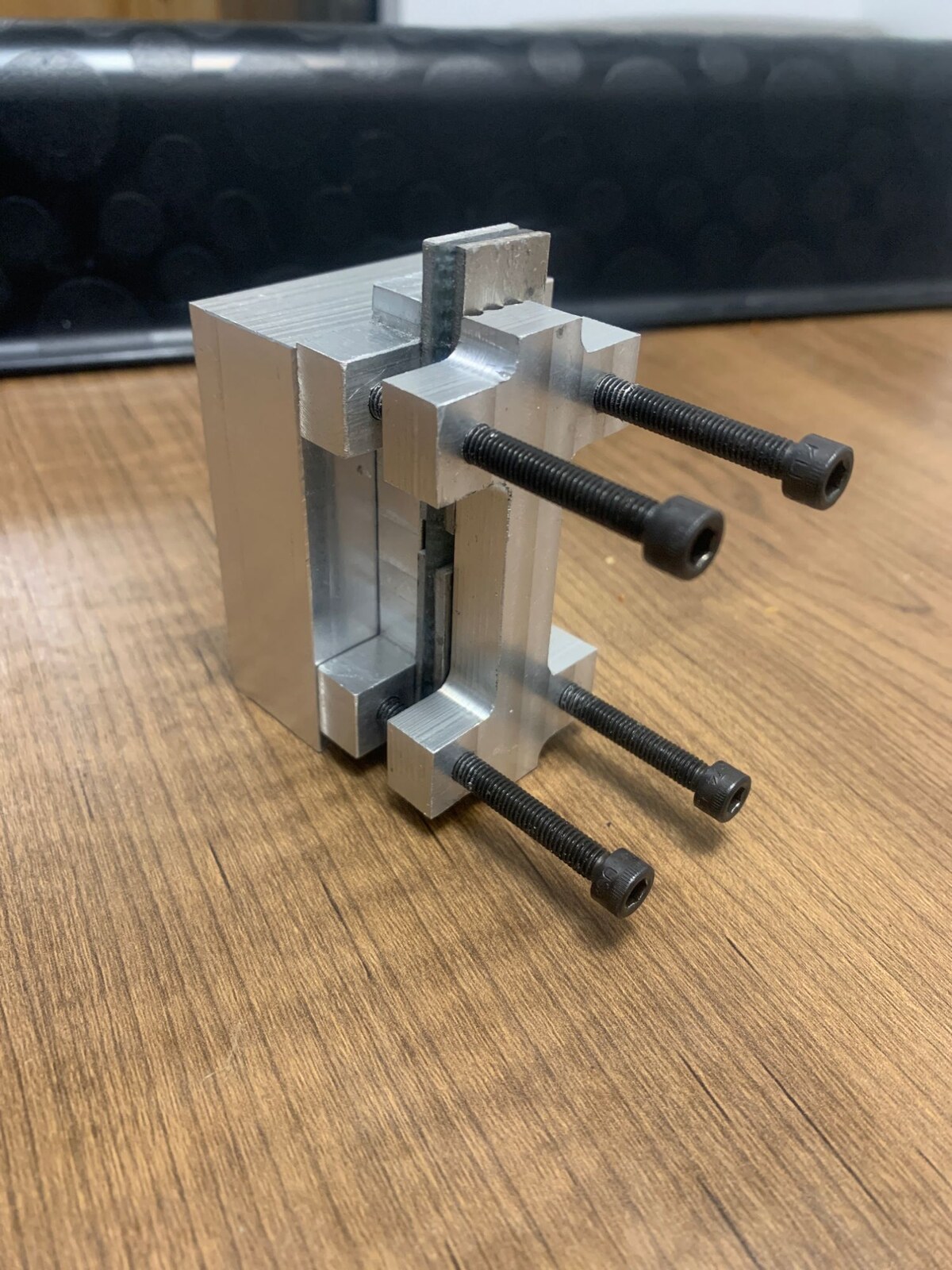
- Machined a Boeing BSS 7260 fixture and prepared test coupons.
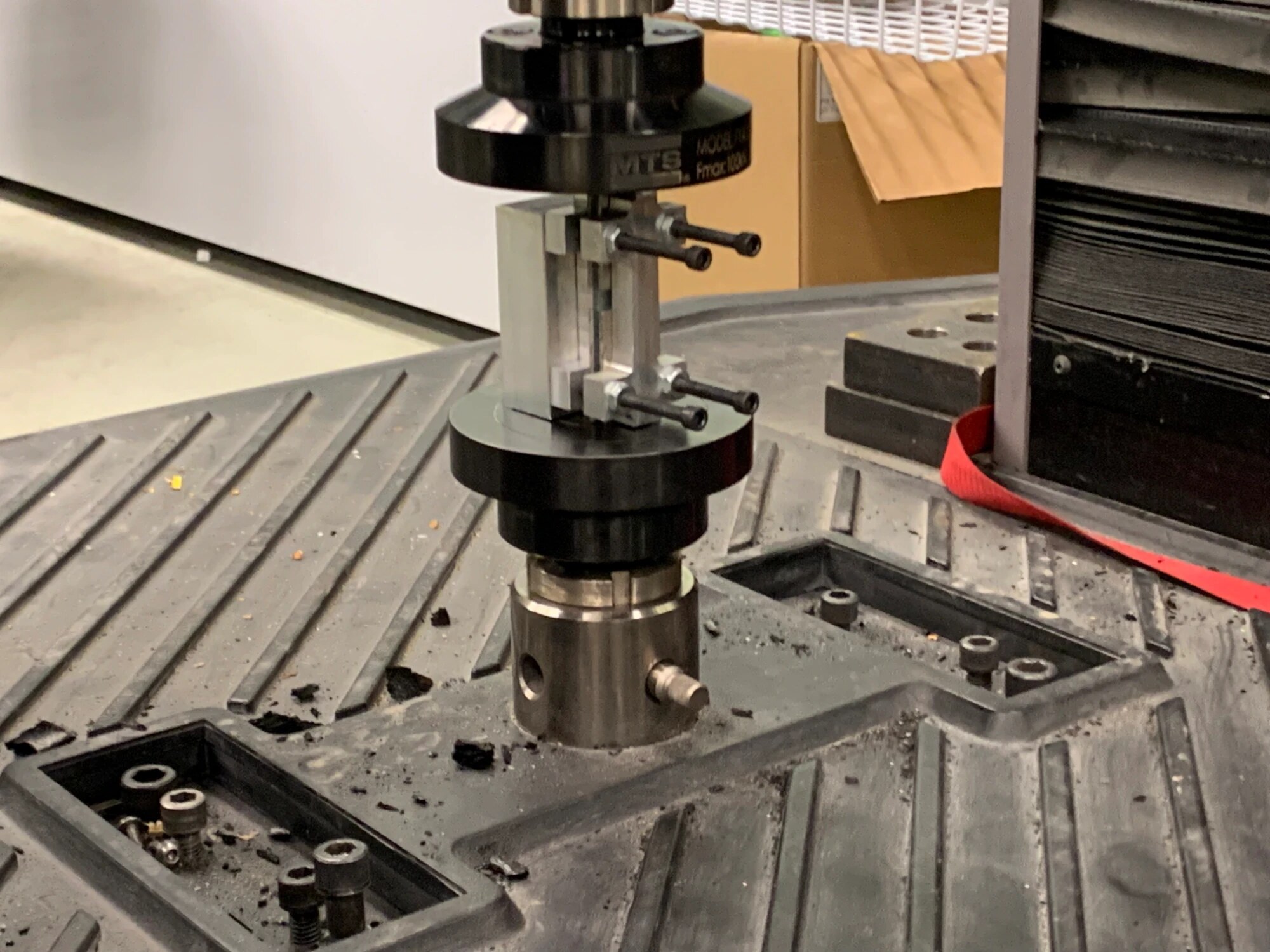
- Performed standardized compression testing (ASTM D695 / DIN EN 2850) on six fiberglass laminates using a 15 kN-capacity system.
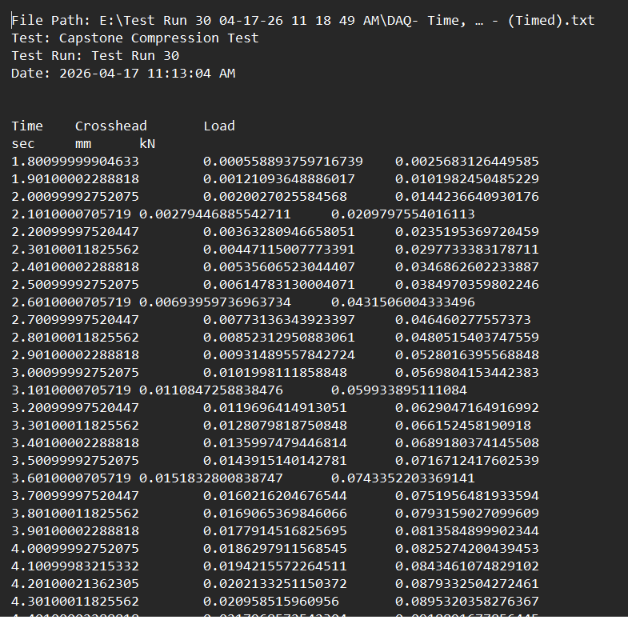
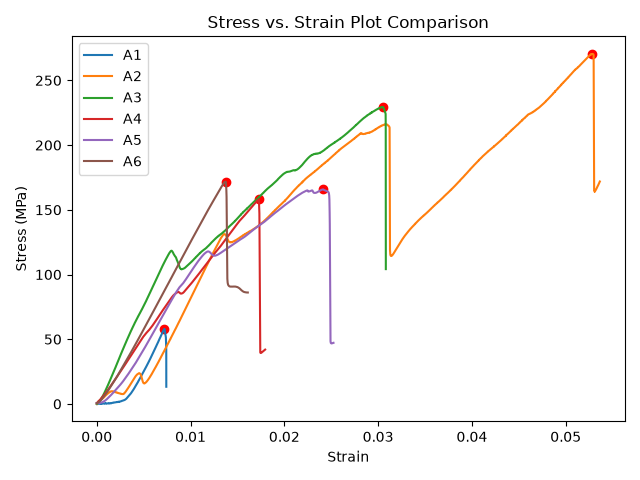
- Developed a Python pipeline to convert load/displacement data into stress-strain curves and extract failure properties.
Result
- Generated quantitative compression data for six laminate configurations, enabling comparison of their mechanical performance for airframe material selection.
Testing
I compression-tested six fiberglass laminate configurations for the Polaris rocket airframe, following ASTM D695 / DIN EN 2850 procedures on a 15 kN-capacity testing system. The aim was to compare their mechanical performance so a laminate could be selected on compression performance and material cost.
Fixture and specimens
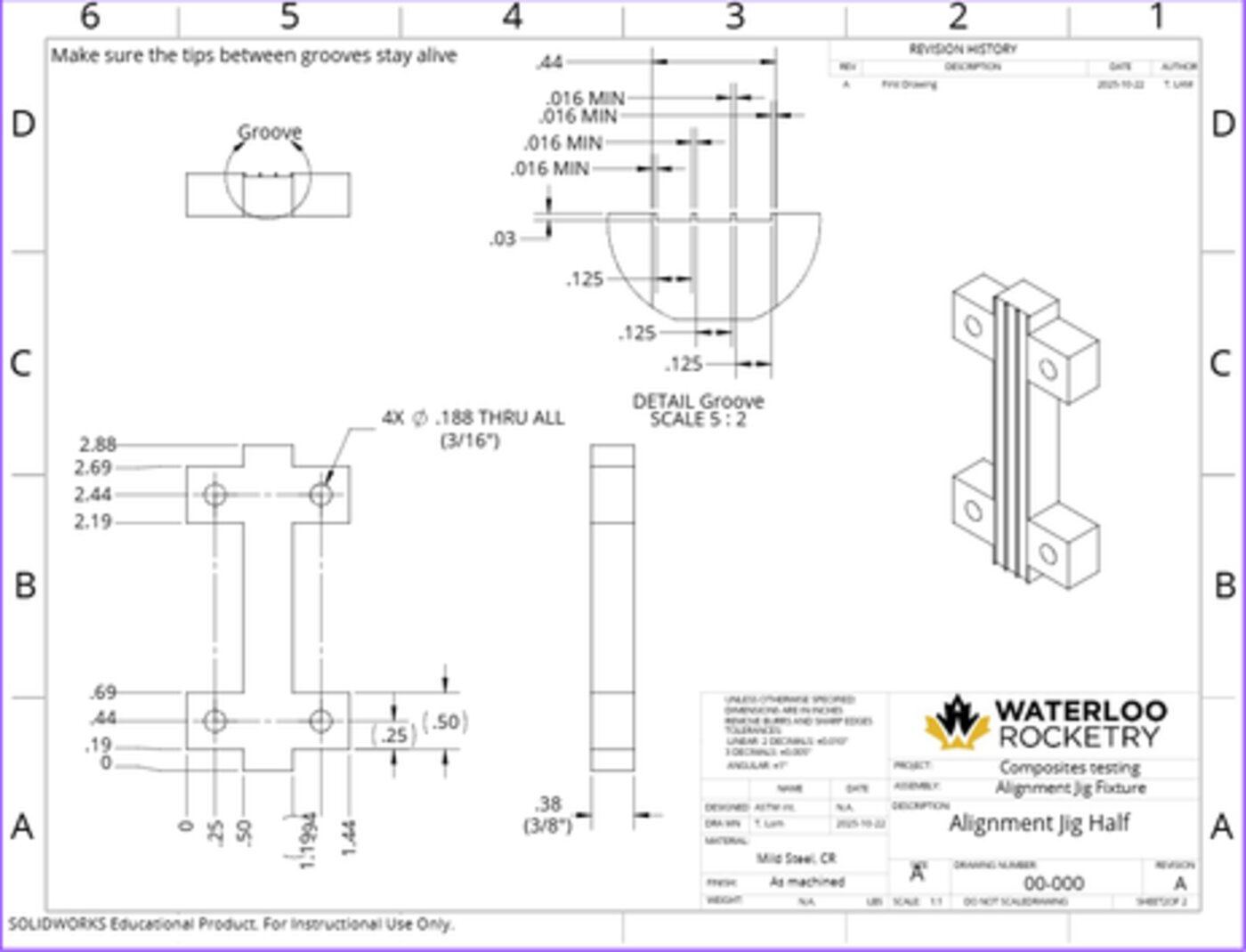
I machined a Boeing BSS 7260 compression-testing fixture from technical drawings using manual milling and lathe operations, holding tight tolerances so coupons align consistently. I also manufactured precision aluminum alignment tabs on a CNC waterjet to support standardized testing.
Data pipeline
I wrote a Python pipeline that converts raw load and displacement data into stress-strain curves and extracts key failure properties, so all six laminates can be compared quantitatively and repeatably.
Related composites work
I executed a full vacuum-infusion layup for composite plate stock: fabric sequencing, mould preparation, bag assembly, leak testing, and resin-flow monitoring.